
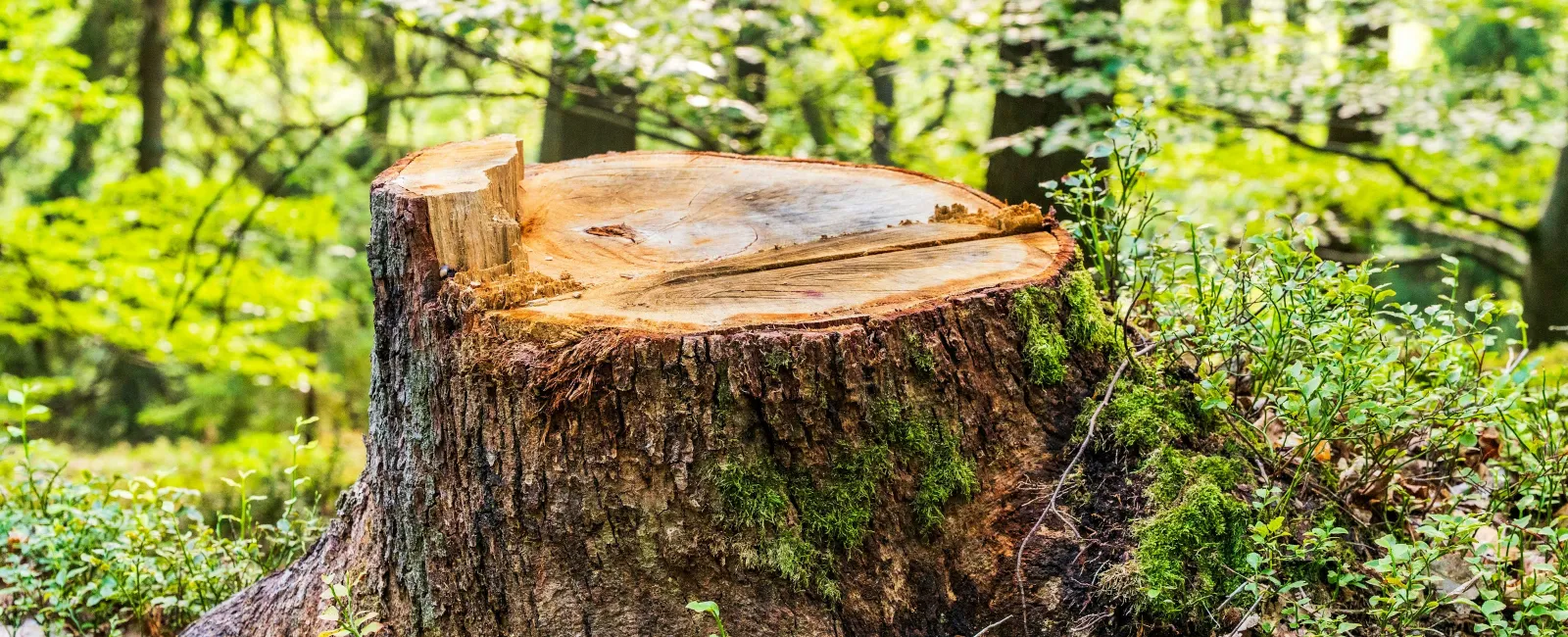
How Long Does It Take a Tree Stump to Rot Naturally? (And Why You Probably Don't Want to Wait)
A lot of folks ask us if they can just let a stump rot on its own. The short answer is yes, eventually. The longer answer is that "eventually" usually means somewhere between 5 and 10 years for most species we deal with in Southwest Virginia, Northeast Tennessee, and Western North Carolina, and even longer for hardwoods like oak and hickory.
Here's what the natural rotting timeline actually looks like:
Softwoods like pine and poplar break down faster, often within 5 to 7 years if conditions are right. Hardwoods like oak, hickory, and maple can sit in your yard for 10 years or more before they fully decompose. Locust and cedar, both common in our region, are especially slow to rot because of their natural decay resistance.
Conditions matter, and our climate isn't always cooperative. Stumps rot fastest in warm, wet conditions with plenty of fungal activity. Our region gets enough rain to help things along, but cold winters slow decay way down. A stump in a sunny, well-drained spot will break down faster than one in a shaded, compacted area.
While you wait, the stump causes problems. Decaying stumps attract termites, carpenter ants, and beetles. They sprout suckers that can grow into a thicket of new shoots. They become slippery hazards in wet weather. And they keep taking up space you could be using for grass, garden beds, a fire pit, or just a clean lawn.
Chemical stump removers don't work as well as advertised. Most over the counter products speed up rot only marginally and still leave you waiting years. They also introduce chemicals into your soil that you may not want there.
Grinding takes us a fraction of the time it would take nature to do the job, and you get your yard back the same day. Call 276.477.4240 or request a free quote when you're ready to stop waiting.