
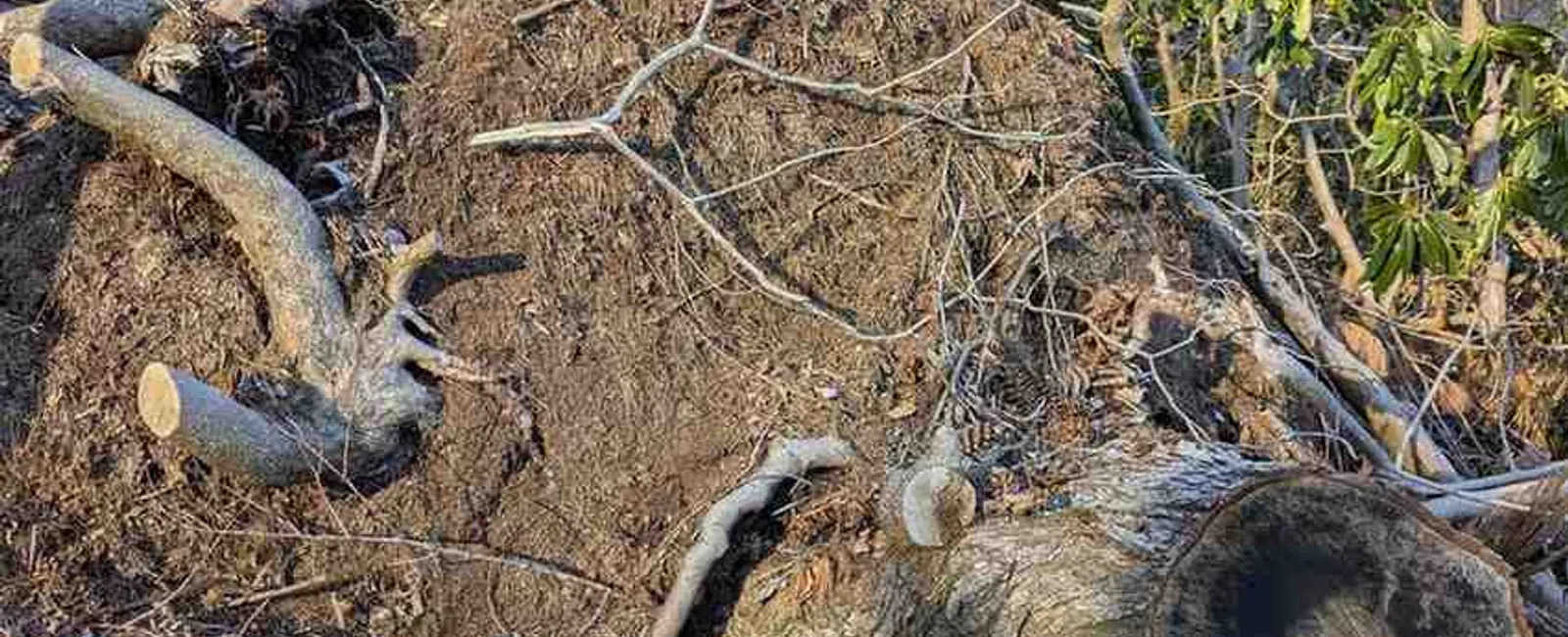
Not outright, but the rules in each of these three states are strict enough that most homeowners can't legally do it in a residential yard once permits, seasonal timing, and size limits are stacked together. A stump that seems like a simple weekend burn often turns out to be the one piece of yard debris every state regulates the hardest.
Why People Assume It's Illegal
Escaped debris burns are the leading human cause of wildfires in Virginia, and Tennessee's forestry division points to the same pattern in its own state. That risk is why all three states regulate open burning instead of banning it outright: the restrictions exist to keep a stump fire from becoming a wildfire, not to stop yard cleanup altogether. In practice, though, the rules are tight enough that most people run into a wall before they ever get a fire going, and a quick search for the actual law often turns up more restrictions than expected rather than a straightforward yes or no.
Virginia's 4 PM Burning Law
From February 15 through April 30, Virginia restricts any open-air fire within 300 feet of woods or dry grass to after 4:00 p.m., a rule adopted in the 1940s because spring winds and dry ground fuel make daytime fires far more likely to escape. Burning is permitted between 4:00 p.m. and midnight as long as someone stays with the fire and takes reasonable precautions the entire time. Localities can add stricter rules on top of the state law, and burning outside the permitted hours is a Class 3 misdemeanor carrying a fine of up to $500. Anyone whose fire gets away from them is also on the hook for suppression costs, regardless of how careful the setup was, and that liability applies whether the fire started with dry leaves or a stubborn stump that took all afternoon to catch.
Tennessee's Seasonal Permit Requirement
Tennessee requires a free burn permit for debris burning from October 15 through May 15 in most counties, obtained online or by phone through the state forestry division. Burning wood waste within 200 feet of an occupied building comes with its own conditions: someone has to stay with the fire the entire time, each burn is capped at 48 hours, and it can't happen more than twice in a 30 day period. A stump that smolders past that 48 hour mark, which is common given how dense and often waterlogged a stump's core can be, puts the burn out of compliance even with a valid permit in hand. Burning without a permit when one is required is a misdemeanor, and cities inside Tennessee often layer on additional restrictions beyond the state rule, particularly inside municipal limits.
North Carolina's Size and Distance Restrictions
North Carolina's open burning rule is blunt: if it doesn't grow, don't burn it. For the yard waste that's allowed, burning is limited to daytime hours and only on days the state's air quality forecast is Code Green or Code Yellow. Pile size matters too. Ordinary residential burn piles can't include stumps or logs over roughly 6 inches in diameter, and even the larger piles permitted for land clearing cap out well under what a mature tree stump usually measures. Piles also have to sit at least 500 feet from the nearest occupied structure, which rules out burning in most yards outright. A code violation here isn't a minor citation either, since the state can pursue fines up to $25,000 per day for burning outside the rules.
When Local Bans Override State Rules
State law sets the baseline, but it isn't the final word. Counties and municipalities across all three states can issue temporary burn bans during dry spells, and those bans suspend permits that would otherwise be valid, sometimes with little advance notice. Some cities and towns prohibit residential open burning inside their limits entirely, regardless of what county or state rules allow just outside city lines. A permit obtained at the start of the week can become invalid by the weekend if drought conditions push the local fire marshal to issue a ban, which is part of why so many people who technically followed the rules still end up with a fire they can't legally start.
What Makes a Stump Different From a Brush Pile
Even where the timing and permit boxes get checked, a stump presents problems a pile of leaves or branches doesn't:
- Its diameter often exceeds the size limit a state sets for a legal burn pile
- Green or waterlogged wood at the stump's core smolders for days rather than hours, which runs past permit duration limits
- Heavy, sustained smoke from a slow burn is what typically draws a neighbor complaint or a fire department visit
- A stump's fixed location often sits closer to a house, fence, or property line than the required setback allows
A brush pile burns down in an afternoon and stays well under most size caps. A stump routinely violates two or three of those rules at once, which is why so many people who start one end up putting it out unfinished.
Checking Current Rules Before Striking a Match
Burn rules shift with the season and can be suspended with no notice during dry stretches or active burn bans, so the only reliable way to confirm current status for a specific address is checking directly with the local fire department, the Virginia Department of Forestry, BurnSafeTN, or the North Carolina Forest Service before lighting anything. That single call or online check takes a few minutes and settles the question far more reliably than assuming last year's rules, or a neighbor's experience, still apply this season.
Skipping the Fire Altogether
Grinding a stump sidesteps every one of these restrictions since there's no permit, no seasonal window, and no smoke to draw a complaint. SWVA Stump Co handles stump grinding and haul away for stumps of any size across Southwest Virginia, Northeast Tennessee, and Western North Carolina, so a stump that's a legal headache to burn can be gone in a single visit instead, with no waiting on a burn ban to lift or a permit window to open.