
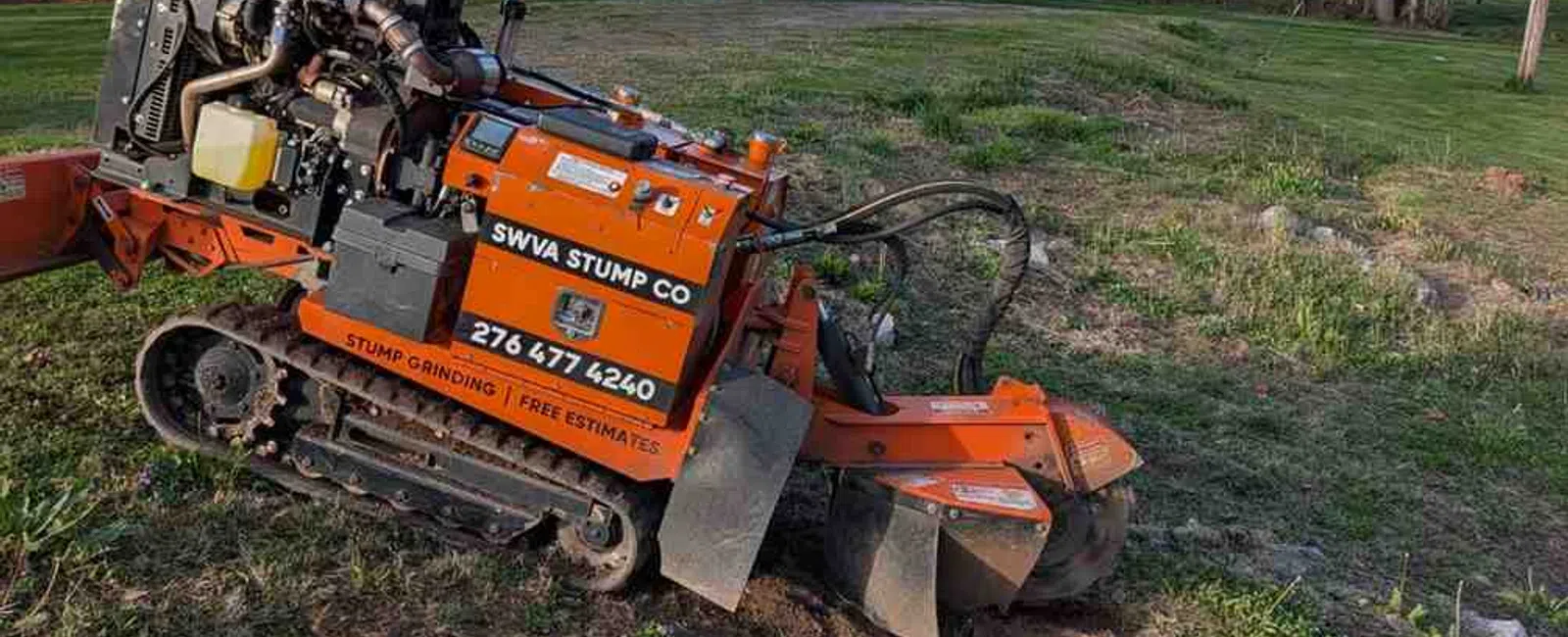
A stump grinder is a machine that chews a tree stump into wood chips right where it sits. Instead of digging the stump out, it cuts the wood down past ground level and leaves a pile of mulch behind. Here's what the machine looks like, how it does the job, and what to expect when the grinding is finished.
What Is Stump Grinding?
Stump grinding is the process of cutting a stump down below the surface of the soil using a powered cutting wheel. The stump isn't pulled out of the ground. It's turned into small chips, one pass at a time, until nothing is left above grade and the top of the root ball is gone.
That's the key difference between grinding and full stump removal. Removal digs out the stump and the main root system, which takes heavier equipment and leaves a large hole. Grinding leaves the deeper roots in place to break down on their own and disturbs far less of the surrounding yard.
What a Stump Grinder Looks Like
Every stump grinder is built around the same core part: a heavy steel cutting wheel lined with hardened teeth. An engine spins the wheel at high speed, and the operator moves it back and forth across the top of the stump. The wheel doesn't slice or saw. It shaves, taking off a thin layer of wood with each sweep.
Beyond that, grinders come in a few different sizes:
- Walk-behind grinders. Small, compact units that look a bit like an oversized mower. These are what rental yards typically carry and are suited to stumps under about 12 inches across.
- Self-propelled and tow-behind grinders. Larger machines with more power and a bigger cutting wheel, used for stumps in the 12 to 24 inch range.
- Commercial grinders. Heavier equipment built for stumps over 24 inches, clusters of stumps, and stumps close to fences or foundations. These are what professional crews run.
Bigger machines finish the job faster, but they also need more room to work. That's why compact commercial equipment is common in the mountains, where access points, slopes, and established landscaping limit what can get to the stump.
How the Grinding Process Works
From setup to cleanup, a typical stump grinding job follows the same steps:
- Checking the site. Before the machine starts, the area around the stump is checked for buried lines, irrigation, rocks, and anything else that could be hit by the cutting wheel. Loose debris is cleared away.
- Positioning the grinder. The machine is moved up to the stump and the cutting wheel is set at the front edge, just above the wood.
- Grinding in passes. The spinning wheel is lowered onto the stump and swept side to side. Each pass takes off a layer of wood. The operator lowers the wheel and repeats until the stump is below grade.
- Working through the root flare. Once the trunk is gone, the wheel keeps going into the widened base where the largest roots start, so the area can be smoothed and covered later.
- Handling the chips. Grinding produces a large pile of wood chips mixed with soil. That mulch is either left on site, moved elsewhere on the property, or hauled away, depending on what the property owner wants.
Most grinders take a stump down somewhere between 4 and 12 inches below the surface. An average stump takes an experienced operator with a commercial machine about 15 to 30 minutes. Hardwoods, wide trunks, and big root systems add time.
What Stump Grinding Does and Doesn't Do
Grinding gets rid of the visible stump and the top portion of the root system. The deeper roots stay in the ground and decompose over time. In most yards that's not a problem, and it's part of why grinding causes less disruption than digging.
Once the mulch is cleared away, the grind site sits a bit lower than the surrounding lawn until it's backfilled with soil. The mulch itself is a mix of wood chips and dirt, and it can be spread as ground cover, composted, or hauled off.
If you plan to reseed, lay sod, or plant over the spot, grinding below grade gives you enough depth to add topsoil and get the area level again.
Can You Run a Stump Grinder Yourself?
Homeowners can rent walk-behind grinders, and for a small stump on flat, open ground a careful person can get through it. But a stump grinder is an industrial machine, not a lawn tool. The cutting wheel spins fast enough to throw wood and stone with real force, the unit is heavy and hard to control on a slope or in soft ground, and rental teeth are often worn, which slows the work.
The bigger risk is what's under the stump. Buried water lines, gas lines, and irrigation can be damaged by a cutting wheel that goes where it shouldn't. Experienced operators know what to check for before they start. A first-time renter usually doesn't.
For larger stumps, multiple stumps, or anything near a house, driveway, fence, or on a grade, hiring an operator with a commercial machine is the safer and quicker route.
Ready to Have Your Stump Ground Out?
SWVA Stump Co provides professional stump grinding across Southwest Virginia, Northeast Tennessee, and Western North Carolina. We're fully licensed and insured, and we grind every stump below grade so the area is ready to reseed, landscape, or build over.
You choose what happens to the mulch. With Stump Grind & Go, we leave it neatly on site. With Stump Grind & Relocate, we move it to another spot on your property. With Stump Grind & Haul Away, we take it with us. If you're still weighing a rental, our stump grinder rental page breaks down what it really takes.
Call 276.477.4240 or contact us online for a free, no-obligation estimate.