
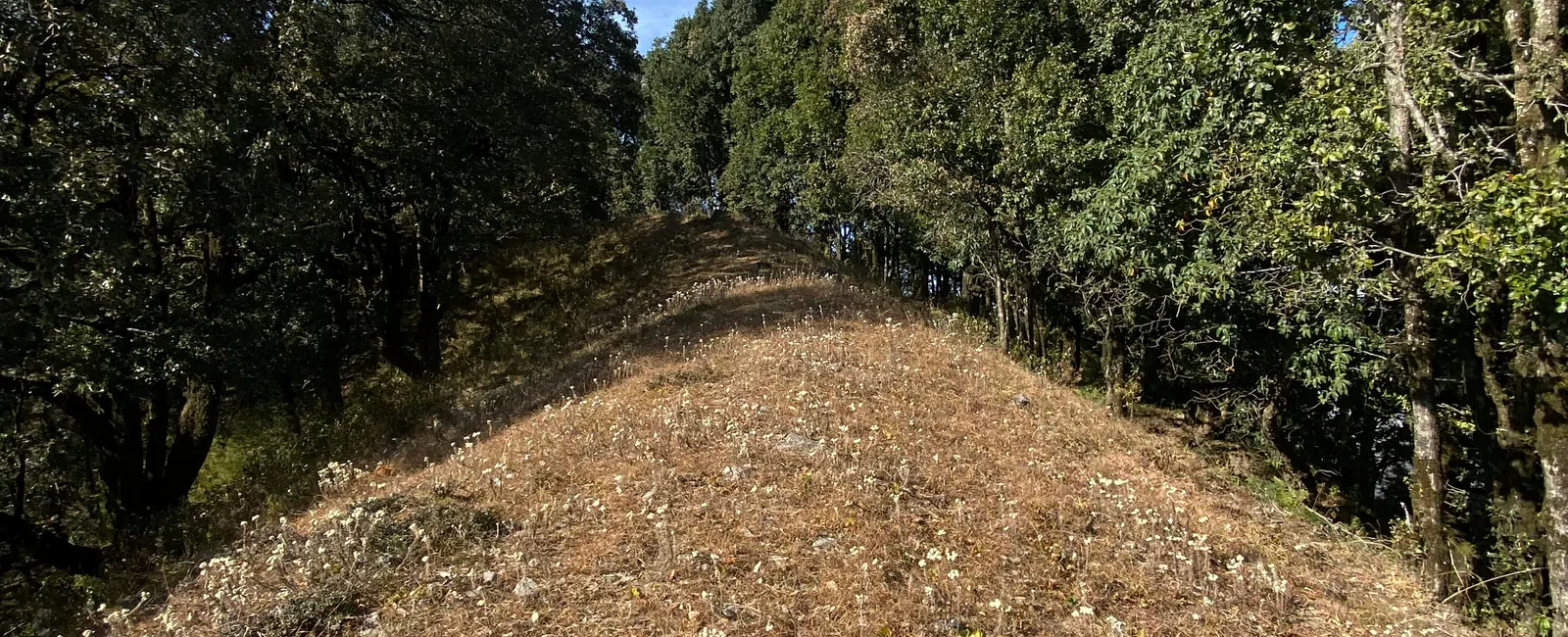
Forestry mulching is a land clearing method that uses one machine to cut, grind and spread brush, saplings and small trees into a layer of mulch right where they stood. Instead of cutting vegetation, piling it and hauling it away, a mulching head on a tracked machine does the work in a single pass and leaves the shredded material on the ground. The mulch layer holds soil in place and breaks down over time, but the stumps and root systems stay in the ground, so cleared areas can sprout back unless they are maintained.
How Forestry Mulching Works
The machine doing the work is usually a compact track loader or skid steer fitted with a mulching attachment, or a larger dedicated carrier built only for mulching. The attachment is a heavy rotating drum or disc lined with steel teeth. As the operator lowers it into brush or against a small tree, the teeth chew the wood into chips, and the drum throws the material back onto the ground.
There are two main head designs. Drum mulchers are the more common choice for underbrush, vines and thick growth because they leave a finer, more even layer. Disc mulchers spin a heavy flat plate that hits harder and moves faster through standing trees, but the finish is usually rougher. Within each type, the teeth can be fixed carbide tips, which hold up well around rocks and dirt, or swinging knives, which cut faster in clean wood but wear quickly in rocky ground.
Most mulchers mounted on compact equipment handle trees up to roughly 6 to 8 inches in diameter. Larger machines can take bigger trees, but at that size it is often faster to cut the tree down first and mulch the top. Brush, briars, vines, saplings and fallen limbs are where forestry mulching does its best work.
What Forestry Mulching Leaves Behind
The finished ground is covered in a layer of shredded wood, usually a few inches deep depending on how thick the growth was. That mulch blankets the soil, slows erosion and keeps weed seeds from sprouting right away. It also breaks down over the next year or two and returns organic matter to the soil.
What forestry mulching does not do is pull anything out of the ground. A mulching head can grind a stump down to about ground level, but it does not reach below grade the way a stump grinder does, and the roots stay where they are. On a wooded lot that means a field of low stumps hidden under the mulch, along with every root system that was there before. For trails, hunting land, fence lines and pasture edges, that is usually fine. For a lawn, a garden bed or anywhere you plan to mow, those stumps become trip hazards and mower blade problems.
Will Grass Grow After Forestry Mulching
Grass will grow back, though how fast depends on how thick the mulch layer is. A thin layer lets grass and native plants come up through it within a season. A heavy layer from very dense brush can smother new growth for a while, and fresh wood chips temporarily tie up nitrogen in the top layer of soil as they decompose. If you want a lawn on mulched ground, rake the thickest spots thinner, add a light layer of topsoil, and seed in spring or fall.
Expect some of the old growth to come back too. Many shrubs and trees resprout from their roots after the tops are removed. Tree of heaven, sumac, multiflora rose, privet and blackberry are all known for it. Mowing or cutting the new shoots once or twice a year for the first couple of years usually keeps them in check while the roots wear themselves out.
Forestry Mulching vs. Traditional Land Clearing
Traditional land clearing usually means cutting trees with saws, pushing brush into piles with a dozer or excavator, digging out stumps, and then hauling or burning the debris. It takes more steps and more equipment, and it disturbs much more soil. It also produces something forestry mulching does not: bare, workable ground with the stumps and large roots removed.
That difference decides which method fits the job. Forestry mulching is the better choice for clearing underbrush in a stand of trees you want to keep, opening up an overgrown back lot, cutting trails, reclaiming a fence line, or clearing around a property line for a survey. It leaves the ground covered and stable and avoids hauling costs.
Traditional clearing is the better choice when the land is going to be built on. Buried stumps, roots and a thick layer of wood chips break down and settle over time, which is a problem under a foundation, a driveway or a septic field. Building sites generally need the stumps and roots removed and the organic material stripped off before any grading or fill. Even for a lawn or a garden, most people end up wanting the stumps gone.
Downsides of Forestry Mulching
The biggest limitation is the one above: stumps and roots stay. Beyond that, the mulch layer can look rough for the first season, and on very dense ground it can be thicker than some homeowners expect.
Forestry mulchers are also heavy, tracked machines. They need a way onto the property, and they struggle on very steep slopes, in soft wet ground, and in tight spaces between buildings, fences and outbuildings. Rocky ground wears the teeth quickly. The machine throws debris with real force, so it has to keep a wide safety zone around houses, vehicles and people. On a small residential lot, those limits can rule it out entirely.
Cost is the other consideration. Contractors usually charge by the hour or by the acre, and the price depends on how thick the growth is, the size of the trees, the slope and how easy the site is to reach. It is usually priced for acreage. A small yard or a single overgrown corner rarely justifies bringing in a mulching rig.
When Brush Cutting or Stump Grinding Is a Better Fit
Not every overgrown property needs a forestry mulcher. Many residential jobs are smaller and tighter: a fence row grown up in briars and saplings, a back corner of the yard that has gotten away from you, brush around a shed, or a strip along a property line. Compact brush cutting equipment can get into those spaces where a full mulching rig cannot fit, and the cut material can be cleaned up and hauled away rather than left on the ground.
Stumps are the other piece. Whether a lot was cleared by mulching, by hand or by a tree crew, any stump you plan to mow over, plant on or build near needs to be ground below grade. A stump grinder cuts several inches below the soil line, so the spot can be covered with topsoil and seeded, which a mulching head is not designed to do.
The right answer comes down to what you want the land to be when the job is done. For wooded acreage you want opened up and left natural, forestry mulching is hard to beat. For a yard you want to mow, plant or build on, the stumps and roots need to come out as well.
Clearing Overgrown Ground the Right Way
Before hiring anyone, walk the property and decide what the finished ground needs to look like, which trees you want to keep, and whether anything will be built there. That answer tells you whether you need mulching, brush cutting, stump removal or a combination of the three. Mark property lines, septic tanks, wells and buried utilities before any equipment shows up.
SWVA Stump Co handles the residential side of that work with brush cutting, brush clean up, debris clean up and stump grinding, including the stumps left behind after land has been cleared. Call 276-477-4240 or request a free estimate to talk through what your property needs.


