
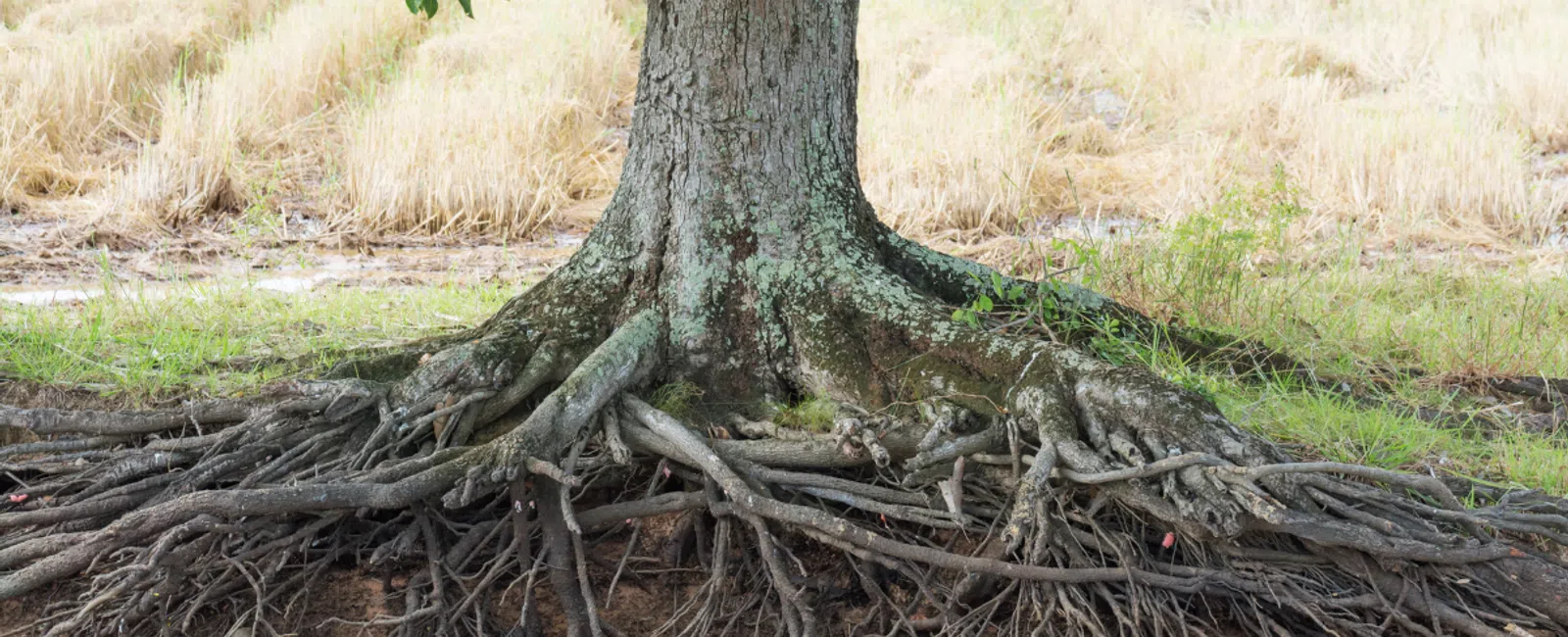
Stump grinding takes care of the part of the stump you can see. The grinder chews the wood down to several inches below grade, turning it into a pile of grindings, and the surface looks clean and finished. However, the root system that spread out from the tree is still down there. Knowing what happens to those roots after grinding helps you plan what to do with the spot, whether you want to replant, lay sod, or just let it settle.
Stump Grinding Removes the Stump, Not the Root System
A grinder works on the stump and the flare where the trunk meets the ground. It does not follow the roots out across your yard. On a mature tree, those roots can extend well past the drip line, and they stay in the soil after the visible stump is gone. This is normal, and it is not a problem for most properties. The roots are no longer attached to a living tree, so they stop taking up water and nutrients and begin to break down on their own.
Tree Roots Break Down Slowly in the Soil
Once the tree is cut and the stump is ground, the roots are dead wood. They decompose the same way any buried wood does, through soil moisture, fungi, and insects. That process is gradual. Small feeder roots can be gone within a season or two, while thicker anchor roots on a large tree may take several years to fully break down. You usually never see any of this happen. The roots stay underground and quietly turn into soil over time.
Because the breakdown is slow and out of sight, there is nothing you need to do to speed it up. The roots will not damage a lawn as they decay, and for most homeowners, they are simply out of mind once the stump is gone.
Ground-Off Roots Rarely Send Up New Growth
One common worry is whether the leftover roots will sprout a new tree. In most cases, they will not. A root system needs the trunk and leaves to feed it, and once those are removed, the roots lose their energy supply. Certain species that sucker aggressively, such as some poplars, elms, and locusts, can push up a few shoots from the roots after the tree is gone. When that happens, the shoots have no way to sustain themselves long-term and can be mowed or cut off until the roots exhaust themselves.
The Ground Often Settles Where the Stump Was
After grinding, you are left with a mix of wood grindings and loosened soil in the hole where the stump sat. As the grindings decompose and the loose material compacts, that spot tends to sink over the following months. A low or sunken area is the most common thing property owners notice, and it is easy to correct. Rake the grindings out or remove them, then backfill the hole with clean topsoil and tamp it down so it sits level with the surrounding grade. It is normal to top off the spot a second time after it has settled further.
What to Do After Stump Grinding to Restore the Area
Once you know the roots are handled by nature, and the hole is the only real task, restoring the spot is straightforward.
Decide what to do with the grindings. The pile of wood grindings left on the surface is a separate question from the roots below. You can leave it, spread it, or have it hauled off, depending on your plans for the area.
Fill and level the hole. Clear the grindings from the low spot, add clean topsoil, and tamp it level. Check it again after a few weeks and top it off if it has settled.
Replant when you are ready. For grass or sod, level the topsoil, then seed or lay sod once the area is firm and even. If you plan to plant a new tree, place it a few feet away from the old spot rather than directly on top of the decaying root mass, so the young roots grow into undisturbed soil instead of breaking down wood.
How much cleanup you have depends on the service you choose. With Stump Grind & Go, the grindings stay on site for you to spread or level. With Stump Grind & Relocate, we move them where you want them, and with Stump Grind & Haul Away, we take everything off your property so you start with a clean, ready-to-restore spot.
Ready to Reclaim That Spot in Your Yard
Whether you want the grindings gone or just want the stump handled cleanly, SWVA Stump Co serves Southwest Virginia, Northeast Tennessee, and Western North Carolina. Request a free quote, and we will help you plan the finished result.