Why Roots Come Up in the First Place
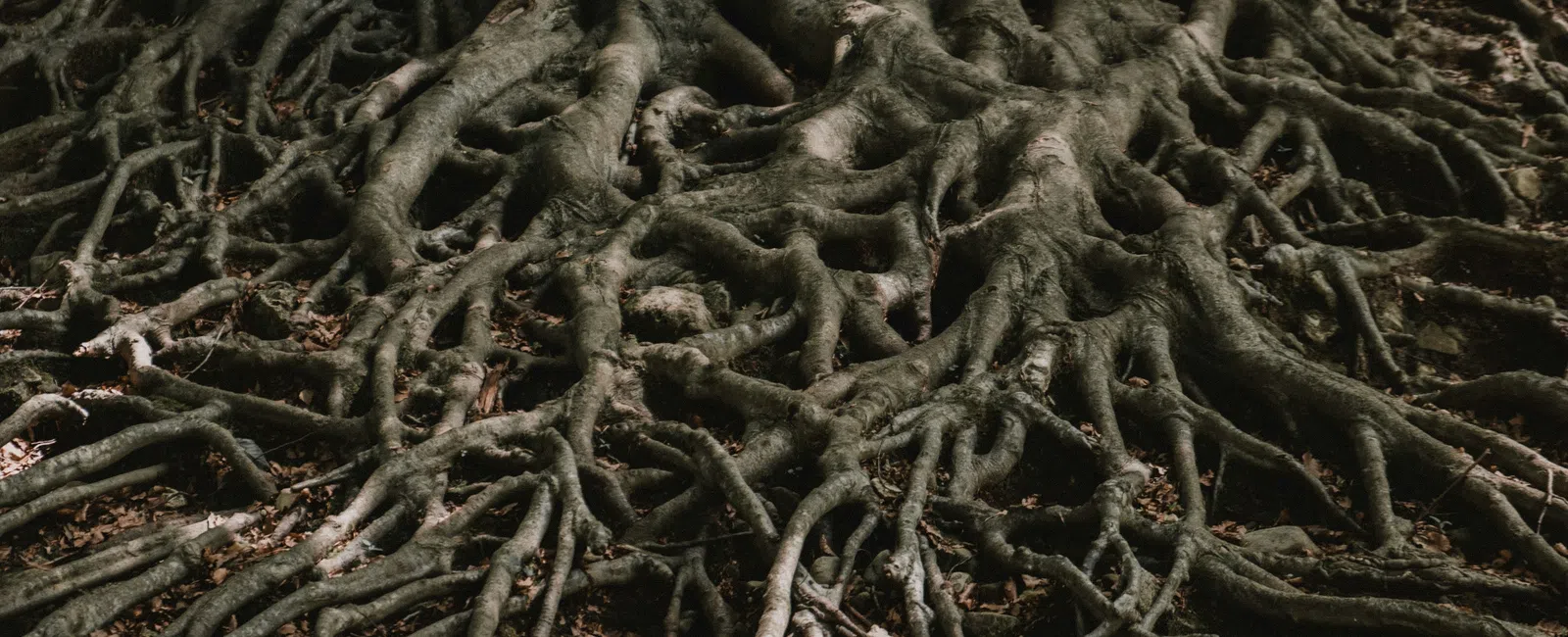
Roots go where the oxygen and water are. Most
of a tree's fine root mass lives in the top 12 to 18 inches of soil, and when
that layer runs out, roots run sideways along the top of whatever they cannot
get through.
Thin soil over rock
Ridge and valley ground puts shale, limestone,
and sandstone closer to the surface than most people expect. There are yards in
Marion, Wytheville, and up around Boone sitting on less than a foot of workable
soil. A root that hits rock at eight inches does not turn down. It turns
sideways and comes up through the turf.
Erosion on a slope
Hillside lots lose grade every heavy rain.
Roots covered by four inches of soil when the house was built stand exposed a
decade later. Nothing about the tree changed; the ground moved. A downspout
dumping across the root zone strips that corner fastest.
Compaction and shallow-rooted species
Foot traffic, mower passes, and construction
equipment squeeze the pore space out of the top few inches, and roots come up
to breathe. Silver and red maple, poplar, willow, and beech surface far faster
than oak or hickory.
What Surface Roots Actually Cost
You
- Mower damage. Bent blades, cracked decks, and a scalped strip of turf that never fills in.
- Trip hazards. On a commercial property, that is a liability question, not a cosmetic one.
- Lifted hardscape. Sidewalks, driveway edges, and patio slabs move when a root swells under them.
- Decay entry. Every mower strike wounds the root, and repeated wounding lets rot into the root system. That shows up years later as a tree on the ground.
That last one matters most. A tree mowed over
for a decade is often already in decline, and when the cause is a poorly placed ornamental, removing it ends the problem rather than managing it.
The Rule That Decides Whether a
Root Can Be Cut
Two things decide it: distance from the trunk,
and thickness. Standard arboricultural guidance is to avoid cutting roots
inside a radius of three to five times the trunk's diameter. On a 12-inch trunk, that is a no-cut zone of three to five feet in every direction. Inside that
ring, you are cutting anchor roots. Outside it, a healthy tree can usually seal
a small wound.
|
Where the
root sits |
Root
diameter |
Cut or
grind it? |
What you
are risking |
|
Inside the trunk flare |
Any size |
Do not cut or grind |
Anchor roots. Cutting invites decay into the
trunk base and takes away the tree's ability to stand in wind. |
|
Within
3 to 5 trunk diameters |
Over 2
inches |
Not
without an assessment |
Structural
loss. The tree looks fine for two years, then goes over in a saturated
spring. |
|
Beyond 5 trunk diameters |
Under 2 inches |
Usually survivable, one or two at a time,
cut clean |
Minor dieback on that side. Most healthy
trees seal it off. |
|
Beyond
5 trunk diameters |
Over 2
inches |
Case by
case, get eyes on it first |
A real
share of the water and anchorage on that side of the tree. |
|
Running off a stump or dead tree |
Any size |
Nothing. No living tree left to injure. |
A few limits apply across the whole table. Do
not take more than about a quarter of the root plate in a season, do not cut
during a drought year, and do not cut two roots on the same side of the trunk.
That is how trees end up leaning, and why we walk
the site and measure the trunk
before a machine touches anything.
The bottom row is the easy one. If the root
runs off a stump or a tree that is already gone, there is nothing living to
protect, and the grinder takes the root and the flare together in one
pass.
What Actually Works, and What
Makes It Worse
The most common fix does the most harm.
Dumping four or six inches of topsoil over exposed roots suffocates them because the fine roots responsible for gas exchange sit right at the surface. Add an
inch at a time at most. Landscape fabric under rock adds heat to the same
problem, and a raised bed ringed around the trunk holds moisture against the
flare and sets up collar rot.
What holds up: a mulch ring two to three
inches deep spread toward the dripline and pulled back off the trunk,
shade-tolerant groundcover set between the roots rather than over them, and
moving the mowing line. On a slope, fix where the water goes first, because if
erosion exposes the roots, nothing you put on top stays there. Tearing out old
fabric and rock leaves debris that has to come off the property.
When Grinding Is the Right Call
Two situations call for the machine rather
than the mulch fork. The first is a root running off a stump or a dead tree.
Grind it flush and be done.
The second is when the tree itself is the
problem: small, hard against a foundation, lifting a walkway, it will keep lifting,
or already declining from mower wounds. Removing the tree and grinding the
stump and root flare together is the honest fix, and you decide afterward
whether the grindings get spread somewhere useful on the property.
Beside a finished walkway, most people would
rather not look at a pile of chips, so the grindings leave with the crew
instead.
One boundary, plainly. A large hazardous tree over a structure is arborist and crane work, not ours. Small tree removal, stump grinding, and surface root grinding on ground a machine can reach. If a root problem is really a big-tree problem, we will say so.
Tired of Mowing Around It?
If a root has already cost you a mower blade, or a walkway is starting to move, the next step is having somebody look at the trunk, the grade, and where the root actually runs. SWVA Stump Co. grinds stumps and surface roots across Southwest Virginia, Northeast Tennessee, and Western North Carolina. Tell us what you are dealing with, and we will come look at it. Get in touch with SWVA Stump Co.